
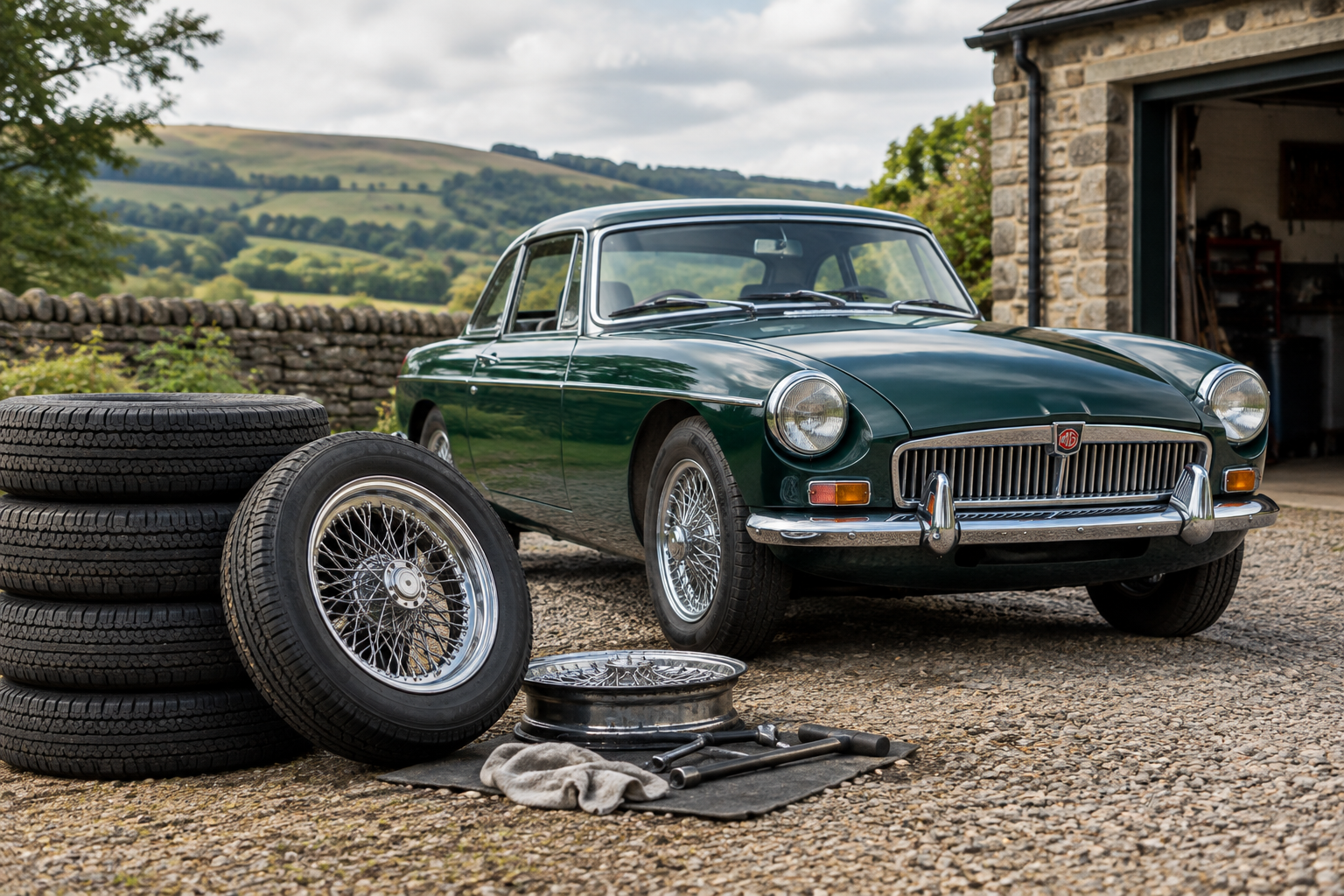
Tyres are among the most important parts of an MGB. They are the car’s contact with the road, influencing steering feel, ride quality, braking behaviour and the way the suspension responds. Wheels matter too: their condition, size and fitment can affect both safety and the character of the car.
Classic MGBs are often used differently from modern cars. Some are driven regularly, others cover limited mileage in good weather, and some spend long periods in storage. A tyre that appears acceptable during a brief inspection may still be unsuitable because of age, damage, incorrect specification or prolonged standing. A careful approach is therefore worthwhile, whether you are maintaining an established car or assessing one before purchase.
Understanding the original wheel and tyre arrangement
MGBs were produced over many years and in several forms, including Roadster and GT models. Wheel and tyre details can vary according to model, market, year, previous restoration work and owner modifications. It is sensible to establish what is fitted to the individual car rather than assuming that every MGB should have exactly the same combination.
Some cars retain steel wheels with trims, while others have wire wheels or aftermarket alloy wheels. Each arrangement has its own inspection points. Steel wheels should be checked for distortion, corrosion around the rim and damage to the mounting areas. Wire wheels require attention to the spokes, rim, hub and correct wheel-fitting components. Alloy wheels should be inspected for cracks, kerbing damage and corrosion, particularly where the tyre seals against the rim.
Wheel diameter, width, offset and stud or hub arrangement all matter. A wheel can appear to fit while still causing clearance problems with the suspension, bodywork or brake components. Changes may also affect the steering effort and the accuracy of the speedometer. If a car has non-standard wheels, keep a note of their dimensions and the tyre size fitted before considering replacements.
How to read an MGB tyre
The markings on a tyre provide useful information. A typical modern size may include the section width, aspect ratio, construction type, wheel diameter and load or speed rating. The exact numbers vary, but the principle is the same: the tyre must be suitable for the wheel and appropriate for the vehicle’s intended use.
Do not select a replacement based only on width or appearance. A change in overall rolling diameter can alter gearing, speedometer readings and clearance. A different sidewall height may also make the car feel sharper or harsher, while a wider tyre can change steering weight and tramlining on uneven roads.
When replacing tyres, compare the markings on all four wheels and check whether the car has a full-size spare. The spare may be an older or different type and should not automatically be treated as ready for normal road use. If the car has a wire-wheel conversion, unusual wheel equipment or a rebuilt specification, specialist advice can help confirm a suitable combination.
Checking tyre condition
Begin with a visual inspection of the complete tyre, including the inner sidewall where possible. Look for cuts, bulges, cracking, exposed cords, embedded objects and uneven wear. A tyre can be worn on the inside edge without the problem being obvious from outside the car, so an inspection underneath or with the wheels turned may be necessary.
Cracking between tread blocks or around the sidewall can indicate ageing and environmental deterioration. Surface marks should not be dismissed simply because the tread appears deep. Equally, not every mark means that a tyre is immediately unusable; the importance depends on its depth, location and severity. If there is any doubt, have the tyre inspected by a competent tyre professional.
Check the tread across the full width. Wear on one shoulder may point towards incorrect pressures, tracking or suspension-related issues. Wear concentrated in the centre can be associated with overinflation, while wear towards both shoulders may be consistent with underinflation. These patterns are clues rather than a diagnosis, and the condition of the wheels, suspension and steering should also be considered.
Tyre age is another factor. The date code is normally moulded into the sidewall, although it may be on only one side. Older tyres deserve particular scrutiny even if the car has covered very little mileage. A low-mileage classic can still have tyres that have spent years exposed to sunlight, temperature changes and periods of standing.
Setting and checking tyre pressures
Correct pressure is important for handling, wear and ride comfort. Use the pressure guidance appropriate to the specific MGB and tyre arrangement, referring to reliable vehicle information or advice from a specialist where the car has been modified. Do not rely on a generic modern-car setting or copy the pressure from a different tyre without checking compatibility.
Measure pressures with a dependable gauge when the tyres are cold. If a tyre has been used, heat can temporarily increase the reading. Check all four road wheels and the spare, allowing for any different requirements. Pressure should also be checked after a car has been unused for a period, as gradual loss is normal and a significant difference between tyres may indicate a leak.
Valve condition should not be overlooked. Damaged or perished valves can allow air to escape and may be disturbed when tyres are changed. Valve caps help keep dirt away from the valve mechanism, but they are not a substitute for sound components. After fitting new tyres, check the pressures again and monitor them during the first few journeys.
Wheel nuts, studs and mounting surfaces
A wheel should sit securely and squarely against its mounting surface. Dirt, paint, corrosion or burrs between the wheel and hub can prevent proper seating. When a wheel is removed, inspect the mounting face and the condition of the studs, nuts or other fasteners. Threads should be clean and undamaged, and the correct type of nut must be used for the wheel design.
Different wheel types may require different fasteners. This is particularly relevant when a car has changed from its original specification. Never assume that a nut suitable for one wheel is correct for another simply because it fits the thread. The contact area and seating shape must also be appropriate.
Fasteners should be tightened evenly and to the correct torque for the vehicle and components. A torque wrench is preferable to relying on feel alone. After wheel removal or replacement, recheck the fasteners in accordance with sound workshop practice. If a wheel does not sit properly or a fastener feels abnormal, stop and investigate rather than attempting to compensate by tightening further.
Wire wheels: additional points to inspect
Wire wheels have a distinctive appearance and require a little more attention than a simple visual check of the rim. Look for missing, loose or damaged spokes and examine the rim for distortion. A spoke that moves noticeably or produces an unusual result when checked by someone experienced may need attention.
The splines, hubs and knock-on fittings should also be kept clean and inspected for wear. Poorly maintained splines can create play or make wheel removal difficult. Because the correct inspection and adjustment of wire wheels requires suitable knowledge and tools, specialist assistance is sensible if wear, looseness or damage is suspected.
When removing or refitting wire wheels, use the correct procedure and avoid damaging the knock-on fittings. The direction and arrangement of the components should be understood before work begins. If the car is being rebuilt or converted, retain clear records of the parts used and have the completed installation checked.
Choosing replacement tyres for an MGB
There is no single universally correct tyre for every MGB. The best choice depends on the car’s wheel specification, how it is driven, the roads it uses and the owner’s priorities. A car used for relaxed touring may benefit from a different balance of ride and response from one prepared for more enthusiastic road driving.
Choose tyres from a reputable manufacturer and ensure that the size, construction and ratings are suitable. Mixing different designs across an axle can produce inconsistent handling, and fitting a matched set is generally the more straightforward approach. If only two tyres are replaced, consider the condition and design of the remaining pair rather than treating the new tyres in isolation.
Modern replacement tyres may look different from period examples. That is not automatically a problem, but appearance should not take priority over suitability. Owners restoring a car to a particular specification may wish to research the correct visual style, while those using an MGB regularly may place greater emphasis on availability, wet-weather behaviour and predictable handling.
When wheels or tyres have been changed
Modified wheels and tyres can be a valuable part of an MGB’s specification, but every change should be assessed as a complete system. Check clearance with the steering turned from lock to lock and examine the gap around suspension components and inner bodywork. Look for signs of rubbing on the tyre or nearby surfaces.
After changing wheel size or tyre dimensions, pay attention to steering weight, self-centring, ride quality and any new vibration. A vibration may result from balance, a distorted wheel, a damaged tyre or a mounting issue. It should be investigated rather than accepted as normal for an older car.
If you are considering a car with non-standard wheels, ask what parts were used and whether the original equipment is available. An MGB’s history can include several changes over its lifetime, and good documentation makes future maintenance easier. For examples of cars in different specifications, you can browse the current MGB stock and, where relevant, review previously sold cars.
Tyres during storage and recommissioning
Long periods of standing can produce flat spots, especially if the tyres are underinflated or the car is left on one position for months. Before driving a stored MGB, inspect every tyre carefully and check its pressure. A vibration that changes with speed may be related to standing, but it should not be ignored if it persists.
Keep the car on a firm, reasonably clean surface and protect the tyres from unnecessary exposure to sunlight and damp. Avoid applying unsuitable products to the rubber. If the car is being stored for an extended period, ask a knowledgeable specialist about appropriate support and movement arrangements rather than relying on an improvised method.
When a restoration includes new wheels, tyres or hubs, make sure the specification is recorded as part of the vehicle’s history. A documented rebuild can make future servicing and ownership decisions more straightforward. If you are planning a project, the MGB rebuild specification page may be a useful starting point, and you can contact California Classics if you need to discuss a particular car or requirement.
A simple MGB wheel and tyre routine
- Check pressures before regular driving and after a car has been stored.
- Inspect the tread, sidewalls and inner edges for damage or uneven wear.
- Look at the wheel rim, mounting area and fasteners for corrosion or distortion.
- Confirm that replacement tyres match the wheel and vehicle specification.
- Investigate vibration, pulling, rubbing or unusual steering effort promptly.
- Seek specialist advice when dealing with wire wheels, non-standard fitments or uncertain tyre age.
Careful tyre and wheel maintenance is not about making an MGB conform to a modern car. It is about preserving the qualities that make the car enjoyable while ensuring that its road-contact components remain suitable for the way it is used. Regular inspection, correct fitment and sensible replacement decisions can help an MGB remain dependable for many more journeys.